The Future of Work: Wearable Robotics and Compassionate Engineering
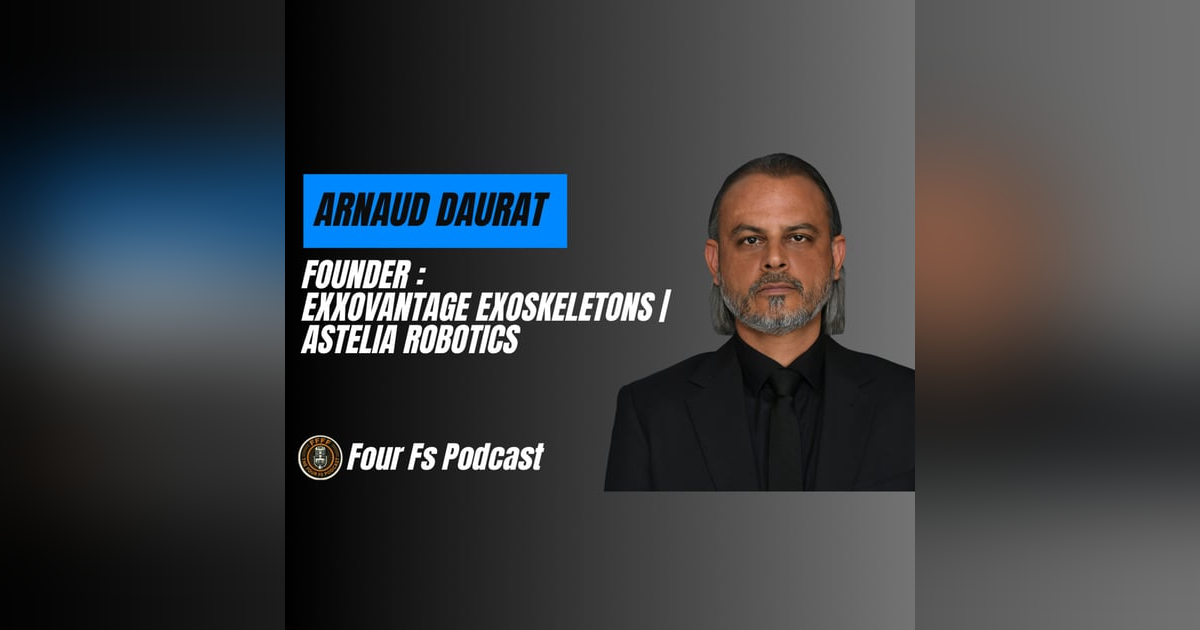


What if the future of labor isn’t about replacing humans with robots, but augmenting them with invisible tech? Arnaud Daurat joins us to reveal how 1.8-pound exoskeletons are saving the workforce from a lifetime of physical pain.
Arnaud Daurat is a Mauritian-New Zealand entrepreneur and philanthropist who transitioned from a 25-year career in landscape engineering to leading the global movement in wearable robotics. As the founder of Exxovantage and Astelia Robotics, he champions "compassionate engineering" by developing minimalist exoskeletons and humanoid robots designed to protect the physical well-being of the workforce on Earth and in future space exploration.Arnaud is dedicated to scaling social change by making human-centric technology an essential part of the global labor force.
In this episode, we explore the intersection of human capability and advanced technology with Arnaud Daurat, the visionary behind ExoVantage. Arnaud shares his journey from the tropical beaches of Mauritius to building a landscaping empire in New Zealand, and eventually founding a leading robotics company. We dive deep into "compassionate engineering"—the philosophy of using wearable robotics to reduce physical strain, prevent injuries, and ensure workers can enjoy their retirement without broken bodies. Arnaud discusses the transition from clunky, movie-style suits to minimalist, 1.8-pound exoskeletons that integrate seamlessly into everyday work. We also discuss why Utah has become the strategic center for their global operations and how the industry is moving toward a future where robotics are as common as steel-toe boots
In his own words, "A calling worth living is one worth dying for."
00:00:00 – Intro: Open source code and the future of humanoid robots
00:00:56 – Arnaud’s background: Moving from Mauritius to New Zealand
00:03:50 – Life in Auckland: Productivity, community, and the move to the US
00:06:28 – Transitioning from irrigation engineering to landscape design
00:07:40 – A lifelong connection to nature and curiosity-driven innovation
00:10:54 – The bridge to biotechnology: Moving from construction to robotics
00:11:13 – Compassionate Engineering: Protecting staff from the physical toll of labor
00:13:58 – Pivoting from distributor to integrated solution provider and manufacturer
00:16:16 – Understanding industrial KPIs: Safety, ROI, and social impact
00:20:10 – Human-centric tech: Reducing strain, pain, and long-term injury
00:22:35 – The evolution of exoskeletons: Focus on weight, breathability, and minimalism
00:25:03 – Overcoming cultural barriers: Making robotics "invisible" and socially acceptable
01:08:40 – Strategy in Utah: Scaling in the Aerospace and Defense market
01:13:42 – Final Thoughts: Defining meaningful impact through social change
Tags: Wearable Robotics, Exoskeletons, ExoVantage, Arnaud Daurat, Workplace Safety, Compassionate Engineering, Humanoid Robots, Biotech, Employee Well-being, Productivity Tech, Future of Work, Manufacturing Innovation, Construction Technology, Aerospace and Defense, Utah Tech, Physical Labor Safety, Occupational Health, Robotics Industry, Industrial PPE, Human Augmentation, ROI in Safety, Workforce Longevity, Minimalist Tech.